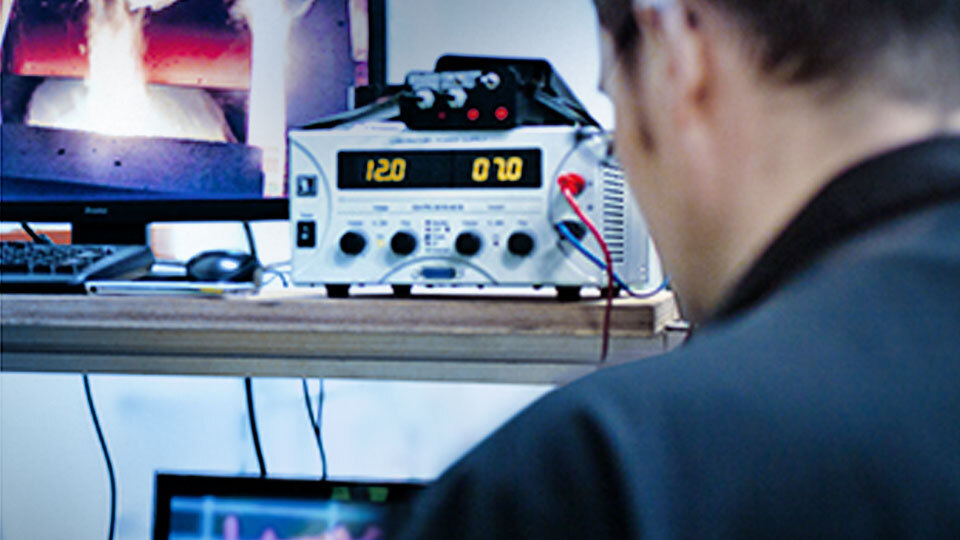
Electrical safety is a key prerequisite for the market approval of electrical and electronic products. Manufacturers must demonstrate that their devices comply with applicable safety requirements, standards, and directives in order to minimize risks to users, animals, and property.
As part of electrical safety testing, products are tested under realistic operating conditions. These include, among other things, electrical, mechanical, and thermal stresses to demonstrate compliance with international standards.
The relevant requirements are defined, among other sources, by IEC and EN standards, the EU Low Voltage Directive (2014/35/EU), and international certification programs such as the CB Scheme or NRTL certifications for the North American market.


The risk posed by electrical devices to people, animals, and property must be minimized. For this reason, mandatory safety requirements apply to electrical products.
Within the EU, these requirements are harmonized by the Low Voltage Directive (2014/35/EU). Manufacturers must ensure that their products do not pose any hazards throughout their entire service life.
Typical protective measures include, for example:
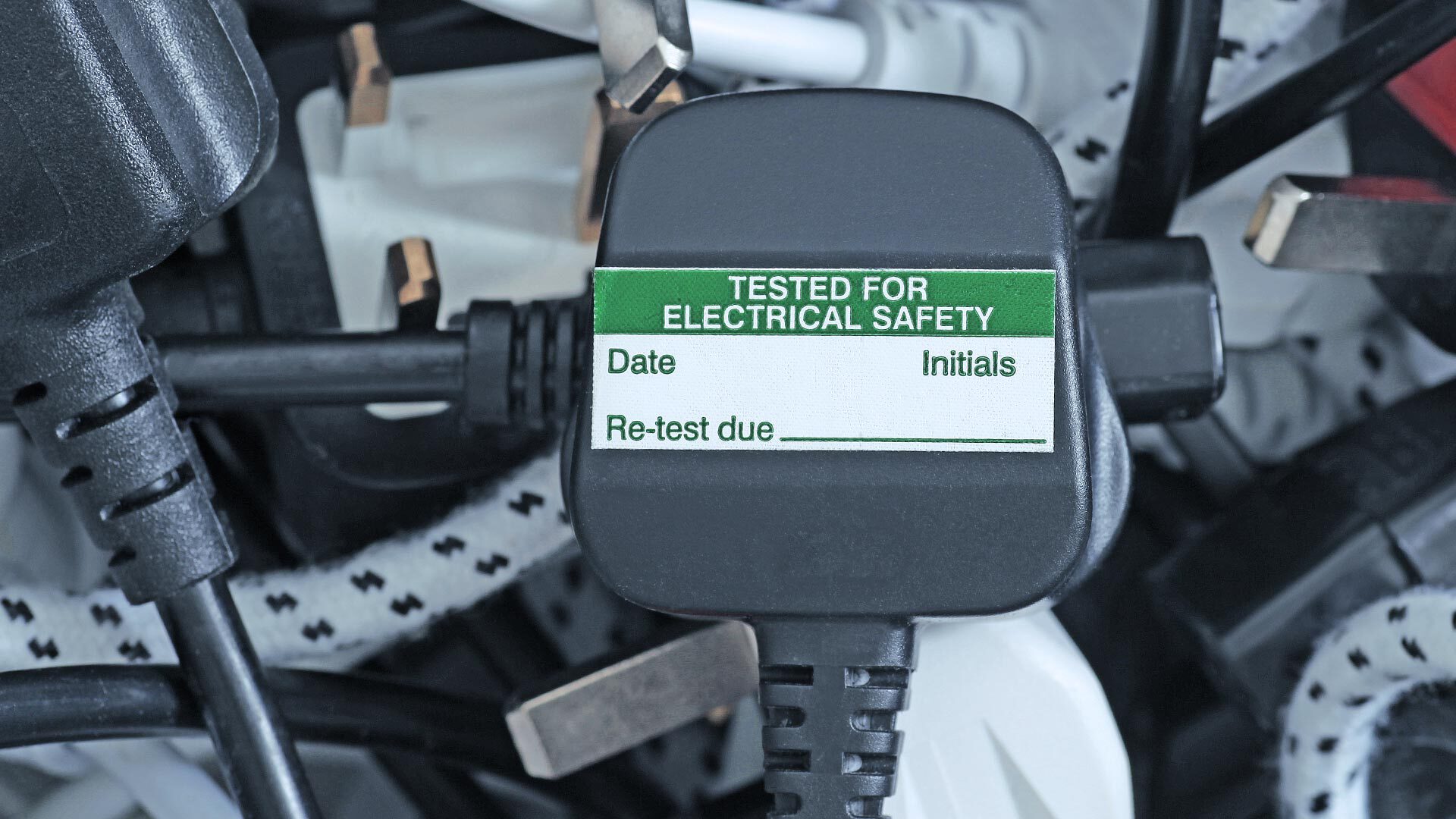
As an accredited testing laboratory for electrical safety testing, we support manufacturers and developers in the testing, certification, and international market approval of electrical equipment.
Our accreditations enable us to conduct safety tests in accordance with international standards and guidelines and to provide globally recognized test reports.
These accreditations ensure that our test reports are accepted worldwide and that manufacturers can efficiently gain market access for their products in various markets.
Our accreditation in the field of electrical safety includes, among other things, testing in accordance with the following international safety standards:
Through a combination of accredited standards testing, internationally recognized certification procedures, and many years of testing experience, we reliably guide companies through the entire process of testing the electrical safety of their products.
From technical evaluation and standards-compliant testing to complete documentation, you receive all services required for the market authorization of electrical products from a single source.
Our electrical safety tests cover a wide range of products and industries. They are based on relevant national and international standards.
Depending on the certification objective and regulatory requirements, different test scenarios are conducted for electronic devices. These test procedures are designed to reliably assess the electrical safety, functionality, and mechanical durability of the devices.
Regardless of the specific certification regime, the most important tests in the field of electrical safety can be divided into several categories.
When measuring protective conductor resistance, the low-impedance continuity of the protective conductor is checked. The purpose of this test is to ensure that, in the event of a fault, a dangerous current is reliably dissipated via the protective conductor.
Even a brief increase in protective conductor resistance can indicate a break in the protective conductor or a fault within the protective conductor path and thus poses a potential safety risk.
The measurement of leakage current and touch current is used to assess potential electrical hazards to humans. This involves checking whether harmful currents can flow through accessible parts of a device or through the protective conductor.
These tests are a central component of modern safety assessments of electrical devices.
High-voltage tests are used to verify the insulation strength of electronic components. These tests are particularly important for devices in the low-voltage range of Protection Classes I and II.
By applying an elevated test voltage, it is determined whether the insulation functions reliably even under extreme conditions and whether dangerous breakdowns occur.
Temperature tests are conducted in special climate chambers. In these chambers, devices are exposed to extreme temperature conditions to verify their functionality and stability under realistic environmental conditions.
These tests are particularly relevant for devices that are operated under varying climatic conditions.
Performance tests are conducted to assess a device’s mechanical strength. These tests examine how robust the test specimen is against mechanical impacts and stresses.
These tests ensure that devices function reliably even under demanding operating conditions and comply with applicable standards.
To obtain market approval for electrical and electronic products, manufacturers worldwide must comply with various safety standards, guidelines, and certification programs. These regulatory frameworks define requirements for electrical safety, product safety, and risk mitigation, and form the basis for testing, conformity assessments, and certifications.
Different regulatory requirements apply depending on the target market—for example, for the European Single Market, North America, or international markets. Among the most important standards and certification systems are the EU Low Voltage Directive, international programs such as the CB Scheme, and national approvals such as NRTL certification.
The Low Voltage Directive (LVD) applies to electrical equipment with a rated voltage of:
It defines essential safety requirements for electrical equipment and is intended to minimize risks to people, animals, and property. Compliance with these requirements is a prerequisite for CE marking and, consequently, for the sale of electrical products within the European Union.
The CB Scheme (Certified Body Scheme) is an international certification system for electrical and electronic products. It enables the mutual recognition of test reports and certificates among more than 50 participating countries.
For manufacturers, this means:
Certification by an NRTL (Nationally Recognized Testing Laboratory) is often required for the sale of electrical products in the U.S. and Canada.
Products are tested according to recognized safety standards, such as UL or CSA standards, to demonstrate their compliance with the regulatory requirements of the North American market.
In addition to regulatory guidelines, international product standards also play a central role in electrical safety testing.
The most important standards include:
These standards define specific test procedures, limit values, and protective measures that ensure electrical equipment does not pose a hazard during normal operation or in the event of a fault.
At our state-of-the-art facilities, we offer electrical safety tests under realistic operating conditions:

Our laboratory in Essen is accredited, by the DAkkS according to DIN ISO 17025 to perform a wide range of electrical safety tests.
Please refer to our accreditation overview for detailed information on our lab’s accreditation services in Germany.
Electrical safety prevents hazards to the human body—such as those caused by various factors, including mechanical, thermal, electrical, or radiation-related risks, which can even be posed by small electrical appliances. Demonstrating electrical safety is therefore a basic requirement for the market approval of electronic devices.
An electrical safety test determines whether a device or product poses a hazard and under what circumstances a hazard might arise.
A series of stress and endurance tests is conducted to determine whether the following risks occur:
Yes, whenever the items to be inspected are electronic devices. As a rule, each regulatory framework has its own standards for testing the electrical safety of technical devices. Therefore, it is essential to familiarize yourself with the relevant requirements.
To select the appropriate tests, the following information, among other things, is required:
In addition, a complete list containing the following information is required:
The following information will help ensure that everything runs smoothly:
The main difference lies in the regional scope of the two certification systems, NRTL and the CB Scheme: Products tested by NRTL-accredited laboratories are certified for the U.S. and Canadian markets.
The CB Scheme, on the other hand, is a multilateral agreement that originated from the European Commission for Conformity Testing of Electrical Equipment (CEE). Products with this certification may be sold in the markets of the member states of the International Commission on the Rules for the Approval of Electrical Equipment (IECEE).
The 1500 V is assumed to be a transient voltage from external circuits.
| Cable type | Additional requirements | Transient voltages |
|---|---|---|
| Pairs of conductors – shielded or unshielded | The building or structure may, but is not required to, have an equipotential bonding system. | 1500 V 10/700 μs
Differential only if one conductor in the installation is connected to ground. |
Important: However, this requirement applies only to interfaces that are not in-house interfaces.
AV devices are covered by EN 62368-1. Chapter 8 (Mechanics) of that standard also addresses moving parts. Fans are classified accordingly, and protective measures are required. Therefore, from a regulatory standpoint, the Machinery Directive does not necessarily need to be applied in this context.
If batteries are installed in the device, a data sheet and a certificate are required. At the same time, the batteries must already have been tested in accordance with their product standard (e.g., IEC 62133-2 for a lithium secondary battery).
EN 62368-1 also defines additional requirements in Annex M: These tests verify whether overcharging of rechargeable batteries is possible; they also test for battery short circuits, charging a rechargeable battery with reversed polarity (if possible), and faults in the charging and discharging circuits.
No, not necessarily. However, a risk assessment must be conducted to determine whether the firmware update affects the existing declaration of conformity. In any case, the Declaration of Conformity (DoC) must also be completed for the new software/hardware combination. The risk analysis will indicate whether new testing is necessary.
The Low Voltage Directive (LVD) applies only to voltages of 50 V AC or 75 V DC and above. If your device falls under the RED Directive, the Low Voltage Directive automatically applies to it as well (voltage limits are reduced to 0 V). If your device does not fall under the RED Directive, it generally does not fall under the Low Voltage Directive either.
However, the Product Safety Act applies, which stipulates that no unsafe devices may be placed on the market. As a manufacturer, you can ensure safety yourself (not recommended) or still test your device in accordance with the Low Voltage Directive. We recommend that you test your device in accordance with the Low Voltage Directive anyway; this allows you, as the manufacturer, to demonstrate compliance with the Low Voltage Directive using a valid test report.
A battery-powered flashlight is not covered by the LVD. The Product Safety Act applies, which stipulates that no unsafe devices may be placed on the market. You should only use certified batteries.
If you are unsure whether you are complying with the Product Safety Act, a test in accordance with the LVD is still recommended. In this case, however, EN 62368-1 does not apply.
Unfortunately, there is no checklist. It is recommended that you purchase the standard and address the safety aspects. Since every device is unique, the use of protective measures is also unique and cannot be generalized.
IEC 62368-1 Edition 4 is the current version of the standard. As of June 2026, it has not yet been harmonized in the EU, but is widely used, particularly in North America. The current EU standard is still EN IEC 62368-1:2020, which is based on Edition 3 of the standard.
One of the most significant changes is undoubtedly the removal of clause 4.1.1 from the previous version. Under that clause, legacy components that had already been tested in accordance with the IEC 60950-1 or IEC 60065 standards could be used in an electrical device compliant with IEC 62368-1 without further certification.
This provision is no longer valid in Edition 4. This means that for many components, retroactive certification according to the updated standard may be required. We would be happy to advise you on whether this change has implications for you and your products and what steps you may need to take to ensure your products’ compliance with national regulations.
There are no known equivalents to 62368-1. However, there are other safety standards that industries may require, but which are not mandatory from a certification standpoint (CB Scheme / NRTL Scheme / UL Certification).
Essentially, this requirement is also included in the RED (Radio Equipment Directive) under the “Health” section, but it may also fall under the LVD, depending on the circumstances.
First, a distinction must be made between body-worn devices with a radio interface and non-body-worn devices. “Worn on the body” means that a device is worn or used more or less permanently at a distance of less than 20 cm from the body. In this case, the focus is on the radiated output power. Devices with low transmission power
In general, ensuring health protection (RED 3.1a) can be assessed or tested differently depending on the device type:
The directive does not initially distinguish between end users. That distinction is made only in EN 62368-1. The safety assessment takes into account who will be using the device and whether it is safe for that user to operate it. The documentation is initially the same for all users. In some cases, it may be written differently for inexperienced users than for professional users, but this is not required.
Safety devices are tailored to the user. Depending on the device, individual safety instructions may be omitted if they are self-evident to a qualified professional. However, as a general rule, omitting these instructions (such as those regarding electrical safety) must not result in any additional risks for the user.
In general, the Low Voltage Directive (LVD) does not apply here. The Product Safety Act applies, which stipulates that no unsafe devices may be placed on the market. As a manufacturer, you can ensure safety on your own (not recommended) or still test your device in accordance with the Low Voltage Directive.
We recommend that you test your device in accordance with the Low-Voltage Directive anyway; this will allow you to demonstrate compliance with the Low-Voltage Directive in your manufacturer’s declaration of conformity, supported by a valid test report.
The biggest advantage is, of course, the cost factor. For example, if power supplies, transformers, VDRs, or similar components are installed in the device, they are only checked for compliance with the scope of 62368-1. Safety-relevant components must be certified according to specific standards. Otherwise, they would have to be tested separately.
In general, it is not necessary to test the integrated component itself. However, it would definitely be advisable to comply with the end-device requirements for LVD. This applies, for example, to the operating temperature range, since the motherboard and its components are tested together with the end device.
A preliminary test can therefore be conducted, but it is not mandatory, as the motherboard itself cannot function independently. In any case, a pre-tested motherboard saves costs for the end product being tested.
The rated voltage and current values apply to the device in all cases and under all conditions, as these represent normal operating conditions. These values are listed to prevent operation at, for example, 110 V. Malfunction conditions are not taken into account here.
You can find a list of DIN standards at
https://eur-lex.europa.eu/legal-content/DE/TXT/?uri=CELEX%3A52014XC0516%2805%29
No, they are not covered by the Low-Voltage Directive because they are not actively powered.
The RED Directive does not include a safety standard in its list of harmonized standards, but refers to the LVD Directive with a voltage limit of 0 V
The CB Scheme is based on IEC standards, taking national deviations into account; as a result, it is possible for a device to comply with the EU Group Differences (EN requirements) but still fail to meet the national deviations of other countries.
Do you have questions about the electrical safety of your product? We’ll guide you through the process, from testing to international certification.