Robots, reference terminals, one team: New interop system now up and running at cetecom advanced
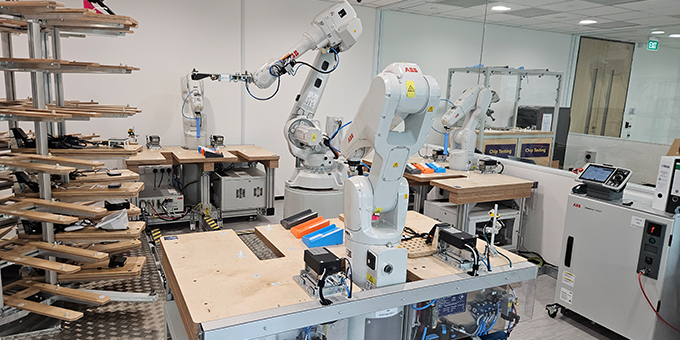
Nine months after project kickoff, it is up and running: our new interop system automatically tests whether payment cards and smartphones with payment functionality work reliably across a wide range of point-of-sale terminals.
More than double the capacity, significantly more functionality
The new system replaces a setup that served us reliably for ten years. As test volumes grew, it became clear that we needed more capacity and more automation.
Key facts:
- Up to 90 reference terminals across 3 test stations working in parallel
- 4 ABB robots: a central robot retrieves the terminals from a carousel storage unit with 84 slots and brings them to the test stations, where additional robots automatically present cards and smartphones to the terminals
- Operation via a browser-based web app
- Dedicated IT infrastructure with access to all hardware, cameras and an LTE fallback, so that support can be provided fully remotely in the future
- CE marking and acceptance in line with the Machinery Directive
This equips the system for significantly higher test volumes. Yet its real strength lies in the interplay of technology that you can’t see from the outside.
When mechanics, software and IT work together
At first glance, the robots and terminals catch the eye. What matters is what controls them: several robots work in sync, and the software coordinates contact operations, cameras, sensors, vacuum grippers and locking mechanisms. Each of the many different reference terminals must be controlled reliably and tested with stable results. On top of that come the analysis of large volumes of test results, reporting and inventory management. The backend is a .NET application running on a central server. The system is operated via a browser-based web app that can be used from any registered device.
The operating concept is equally well thought out: the system has its own IT infrastructure with secured remote access and cameras that are directed exclusively at the system itself. The customer decides when we are allowed to access it. This allows us to diagnose faults remotely and, in the future, to provide all support without on-site visits.
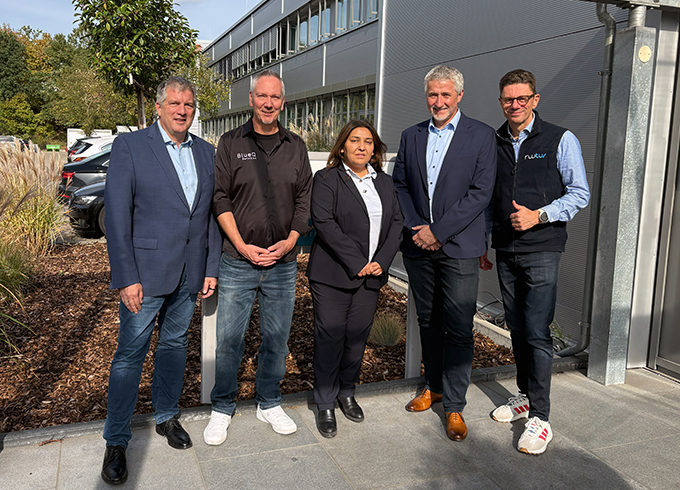
Stronger together: one team
A project of this scale only succeeds when everyone pulls together. That is exactly what we experienced: Engineering, software, procurement, logistics and safety worked closely together across disciplines, supported one another and solved problems as a team.
Together we achieve more – move AS ONE!